
Last updated: March 18, 2026
Selection Sunday is in the rearview mirror, the bracket is out, and the best part of March Madness is back:
finding the teams the public is sleeping on.
If your bracket is chalky every year (and your office pool proves it), you’re missing the same thing everyone misses:
one or two “high-leverage” upsets that separate a good bracket from a winning bracket.
This isn’t a list of random “Cinderella vibes.” It’s a practical, repeatable approach:
spot the matchups where a lower seed can actually control the game—tempo, shot quality, and late-game execution—
then pick a small number of upsets that can pay off without torching your bracket.
Quick 2026 Tournament Timeline (so your bracket stays current)

- Bracket revealed: March 15, 2026 (Selection Sunday)
- First Four: March 17–18 (Dayton, truTV)
- Round of 64 begins: Thursday, March 19
- Final Four: April 4
- National Championship: April 6 (Indianapolis)
Streaming varies by package, but the “standard” setup most fans use includes the March Madness Live app/site,
plus the Turner/CBS family (CBS, TBS/TNT/truTV) and related streaming bundles.
The “Sleeper” Checklist (use this before you pick any upset)

When I’m deciding whether a lower seed is real—or just trendy—I look for:
- A backcourt you can trust.In a one-and-done tournament, a steady guard rotation matters more than highlight plays.
- One repeatable way to score.If a team can generate points without relying on miracle shots (or can reliably get to the line),it has a real upset path.
- One repeatable way to win possessions.Turnovers forced, defensive rebounding, or slowing the game down—any one of these can flip a matchup.
- Matchup leverage, not “upset narratives.”You’re not betting on magic—you’re betting on a style clash the favorite hates.
And yes, the classic “12 over 5” upset pattern is popular for a reason. Don’t force it—but don’t ignore it either.
March Madness 2026: 5 Sleeper Teams Worth Circling

| Sleeper team | Seed / matchup | Why it’s live | Bracket move |
|---|---|---|---|
| High Point | #12 vs #5 Wisconsin (West) | Mid-major profile that’s been earning real respect; classic “public-overlooks-them” spot. | Upset candidate (or keep it close) |
| Northern Iowa | #12 vs #5 St. John’s (East) | A dangerous draw for any power team—especially in a game that could tighten up late. | Upset candidate |
| Utah State | #9 vs #8 Villanova (West) | Conference champion momentum + the classic “8/9 is basically a coin flip” zone. | Advance one round potential |
| Santa Clara | #10 vs #7 Kentucky (Midwest) | Advanced-metric believers love this profile more than the seed suggests. | First-round upset potential |
| Louisville | #6 vs #11 South Florida (East) | Even at a #6 seed, this is a “value” team—many analytics rate them stronger than their line. | Sweet 16 ceiling if the draw breaks right |
How to Use This List Without Wrecking Your Bracket
- Pick 1–2 “high-confidence” upsets (not 6–8 chaos picks).
- Mix seed levels: one 10/11 upset + one 12/13 upset is usually enough leverage.
- Don’t overfade the top line. Most winning brackets still have at least one No. 1 seed in the Final Four.
- Update after the First Four. A play-in winner can be under-seeded and dangerous in Round 64.
Disclaimer: This article is for entertainment and bracket-pool strategy. If you bet on games,
follow your local laws and set limits—March Madness is supposed to be fun.
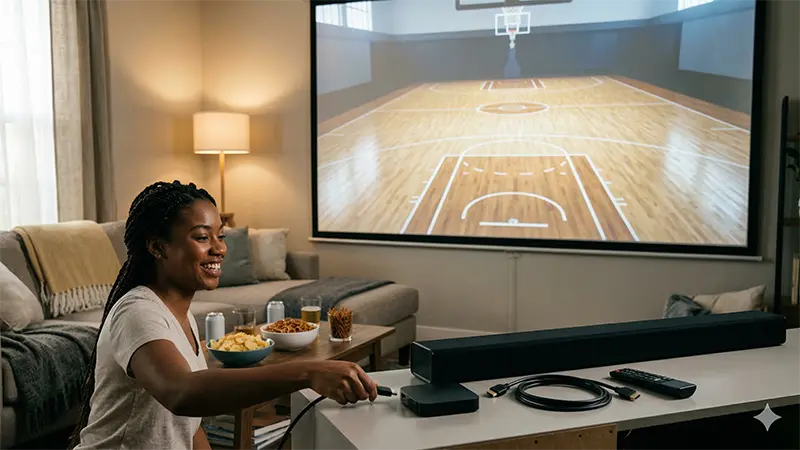
Optional: Watch Party “High-Impact” Gear (Affiliate-Friendly Ideas)

If you’re hosting friends, these are the upgrades that actually change the experience (and tend to convert well):
- 65–77″ 4K TV (or a 4K projector for the “bracket wall” vibe)
- Soundbar or entry AV receiver + speakers (crowd noise matters)
- Streaming device (reliable Wi-Fi + fast UI beats laggy smart-TV apps)
- HDMI switch (if you run multiple inputs: cable/streaming console/laptop)
If you want, you can add your own product links here (Amazon US) with a short “why I picked it” paragraph for each item.


コメント